11 - Weaver’s workshop
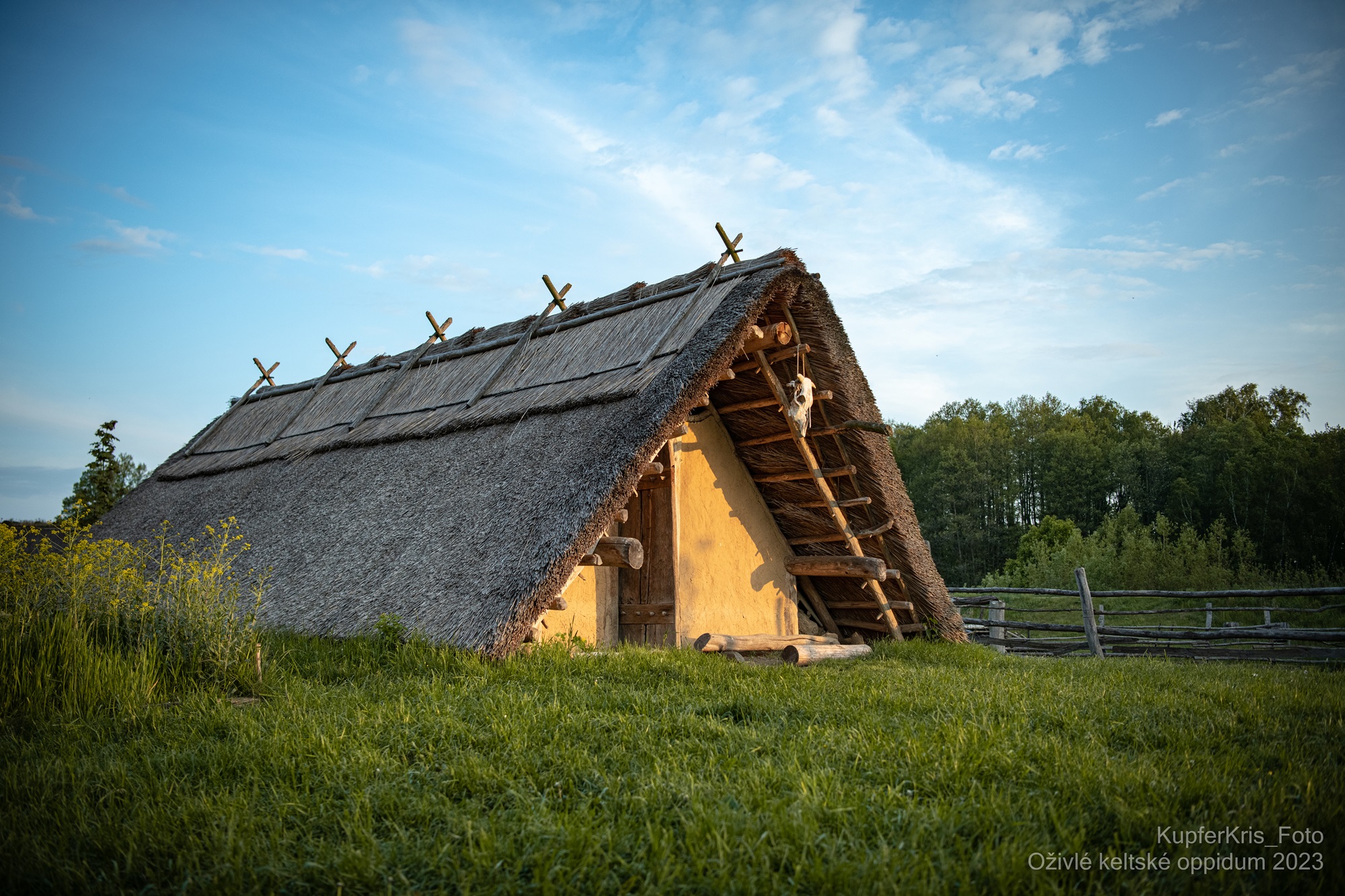
The reconstruction of this building represents a weaving workshop. In addition to weaving looms, we can see equipment needed for the entire process of textile production. Combs for combing wool, breakers for breaking dry stalks of flax, nettles, and hemp, spindles and distaffs for spinning, small comb looms and tablets for weaving decorative hems, and a frame for making braided bands.
Typical women’s clothing consisted of long undergarments with sleeves, over which was worn the so-called peplos – a fabric tunnel that was fastened on the shoulder with brooches and tied at the waist with a belt. Men’s clothing consisted of a tunic – a shirt about thigh-length – and trousers. These were a significant Celtic innovation, as before the La Tène period, men wore only skirts or just long tunics with a loincloth. In summer, linen was more commonly worn, while warm woolen materials were chosen for the cold season, and clothing was layered. As outerwear, a thick woolen cloak fastened with a bronze or iron brooch was worn.