18 - Potter's Workshop
19 - Pig Pen
20 - Sanctuary
21 - Goose Pen
22 - Outdoor Kitchen with Bread Oven
20 - Sanctuary
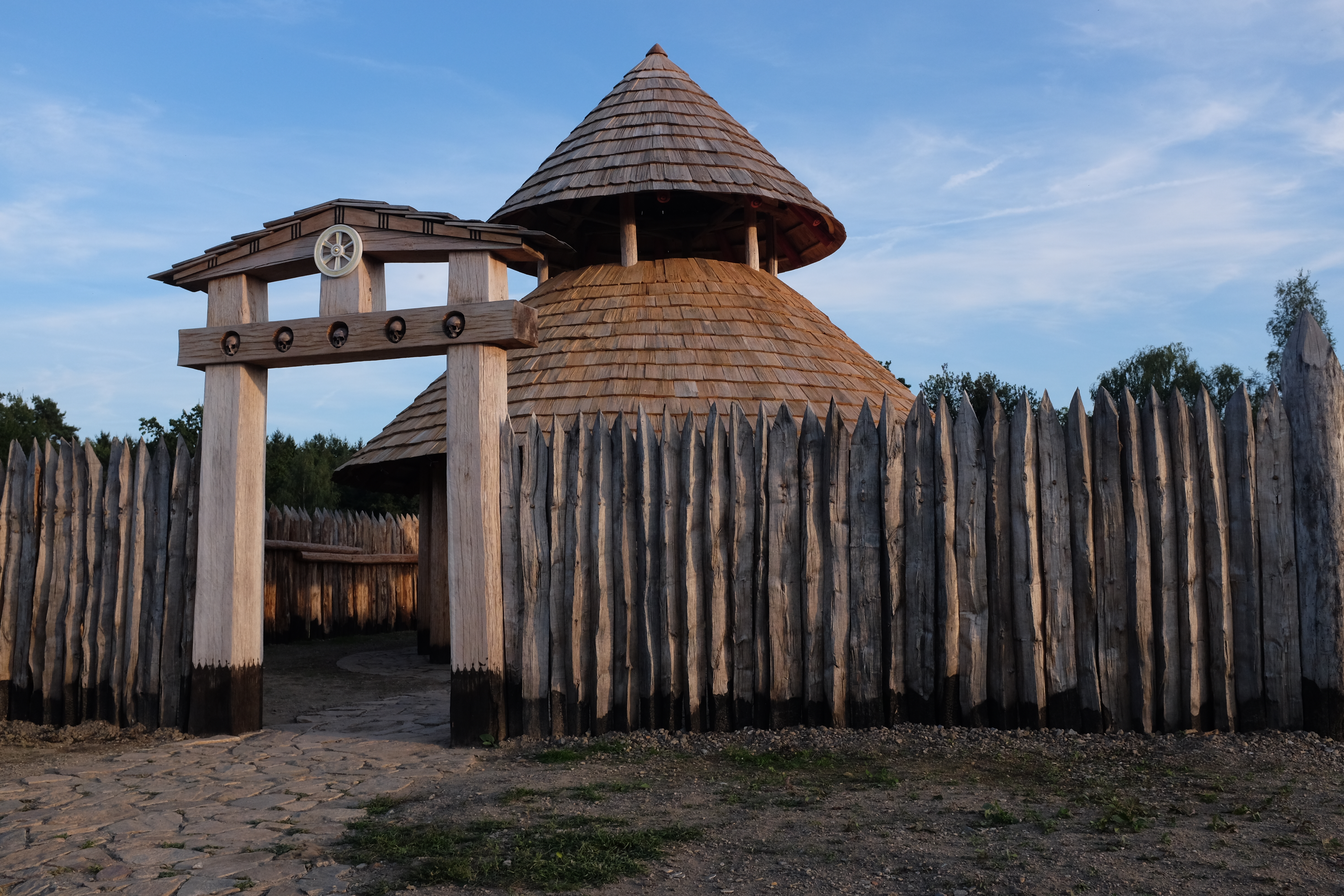
Based on findings from the German oppidum Manching
This structure is one possible form of Celtic sanctuaries. From ancient authors, we know that the Celts used sacred groves for religious rituals, but there is also evidence of sanctuaries enclosed by rectangular palisades with a wooden temple in the center. On the pillars, deities are depicted with their attributes. From the entrance to the right, they are:
- Epona – lady of horses; in Bohemia, she is sometimes identified with the goddess Kotyz.
- Teutatés – “father” and protector of people, but also a god of war (protecting his people against outsiders); his attribute is the heads of defeated enemies.
- Modron – mother goddess, protector of women and children.
- Taranis – lord of the heavens, sun, and storms; his attribute is the spoked wheel, a symbol of the sun.
- Litavis – goddess of fertility and harvest, with ears of grain as her attribute.
- Lugh – god of all crafts and arts, sometimes also a solar deity.
- Brigit – goddess of water and fire, patroness of blacksmiths, still venerated in the British Isles as Saint Brigid.
- Sucellos – sometimes god of blacksmiths, other times of coopers and brewers; his attributes are a large mallet and a cup.
- Nantosuelta – wife of Sucellos, patroness of the hearth and protector of the home.
- Esus – god of trees, depicted with an axe cutting a tree, and thus possibly also a god of death.
- Morrígan – goddess of death, who flies over battlefields in the form of a crow, carrying away the souls of fallen warriors.
- The horned god Cernunnos – god of wild animals and lord of the forests.